Legal Notice
1. Scope of the legal corpus
This corpus is designed as a common foundation for Services of different kinds: online services, software, collaborative tools, editorial content, comparison services, recommendation engines, marketplaces, matching services, generation of requests or quotations, bookings, orders, subscriptions, artificial-intelligence features, programming interfaces and other digital products operated under a distinct project name.
The fact that a Service has its own name, subdomain, visual identity or interface does not create a separate legal person. Unless expressly indicated otherwise at the relevant time, the names Zhubora and the project names designate Services, products, brands, trade names or technical interfaces and not autonomous companies.
Where a Service presents information specific to a product, transaction, seller, provider, subscription or feature, that information supplements the common corpus and prevails only for the precise subject matter it describes. It does not alter the identity of the Publisher unless expressly and unambiguously stated.
2. Identification of the Publisher
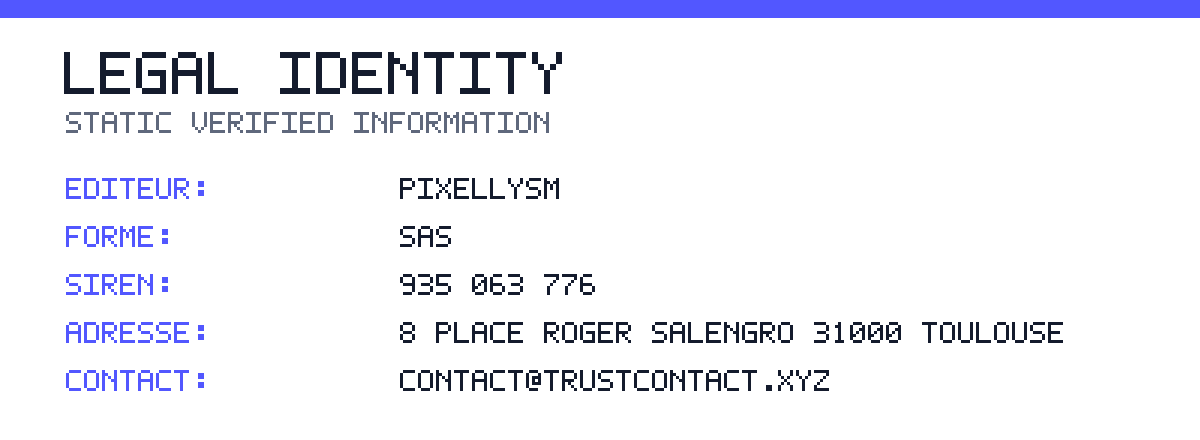
The legal entity that publishes or operates the Services is identified in the Legal Identity Block below. This block forms an integral part of these Legal Notices. The other legal Pages may use the terms “Publisher”, “we”, “us”, “our” or “ours” to refer to that entity without reproducing its identification details.
The information in the Legal Identity Block may be updated when the Publisher’s official details change. Updating those identification details does not, by itself, alter the nature of the Services or contractual rights already acquired that cannot be modified under applicable law.
3. Publication management and editorial responsibility
Publication management and the persons or functions legally responsible for publishing are those designated by the Publisher in its official information or, where required by applicable legislation, in a supplementary information block accessible from the relevant Service.
Content supplied by users, sellers, professionals, partners, advertisers or other third parties does not imply prior approval of that content by the Publisher. Responsibilities relating to such content are allocated in accordance with the General Terms and Conditions, moderation rules and applicable mandatory law.
4. Hosting, infrastructure and technical providers
The Services may use multiple providers for hosting, networking, content delivery, storage, computing, messaging, payment, authentication or security. Those providers may differ from one Service to another, from one region to another, or change for reasons of performance, security, availability or compliance.
Where applicable legislation requires a particular host or provider to be identified by name, the required information is made accessible in the relevant Service, its infrastructure block, its legal interface or any other appropriate location. Use of third-party infrastructure does not confer on that third party the status of Publisher of the Service.
5. Contact, notices and official requests
The Publisher’s official contact details appear in the Legal Identity Block or in the Service’s contact interfaces. Requests must contain sufficient information to identify their subject matter, the relevant Service and, where necessary, the person or content concerned.
A request sent to a channel not intended for legal notices, security reports or data-protection requests may require internal redirection before it is processed. Nothing in this article shortens any mandatory period prescribed by law.
Notices addressed to the Publisher are deemed received only after their actual arrival through an officially provided channel, subject to contrary mandatory rules. Fraudulent, impersonated, abusively automated notices or notices containing dangerous attachments may be filtered for security reasons.
6. Intellectual property of the ecosystem
Unless otherwise stated, the architecture of the Services, software, interfaces, structured databases, graphic elements, trademarks, logos, editorial texts, documentation, models, methods, taxonomies, classification systems and other original elements supplied by the Publisher are protected by applicable intellectual-property rights.
No ownership right is transferred merely as a result of access to a Service. Any use that is not expressly authorised, including substantial extraction, systematic reproduction, interface copying, commercial reuse, creation of a mirror service or circumvention of technical measures, is prohibited to the extent permitted by law.
Trademarks, content, photographs, software, catalogues or other elements belonging to third parties remain subject to the rights of their respective owners. Their presence in a Service does not imply any transfer of rights or partnership beyond what is expressly stated.
7. Domain names, subdomains and redirects
Use of a domain, subdomain, short URL, temporary domain, redirect or third-party domain to provide a Service does not, by itself, alter the identity of the Publisher. The contractual scope is determined by the reference to these Pages and by the information displayed in the Service.
Test, staging, administration, demonstration or development environments may exist. Unless expressly offered to the public, they do not necessarily constitute contractually available Services and may be modified, limited or withdrawn without notice.
8. Third-party content and information
Some Services aggregate, index, compare, rank or present information originating from sellers, providers, public databases, partners, users or external sources. Unless expressly undertaken otherwise, the Publisher is not the author of that information and does not guarantee that it will remain complete, available or continuously up to date.
External links, integrations and references to third parties are provided to facilitate use of the Service. The Publisher exercises no general control over third-party websites, contracts, practices, policies or content and is responsible for them only where the law or a specific undertaking attributes that responsibility to it.
9. Reporting content and third-party rights
Any person who believes that content accessible through a Service is manifestly unlawful, infringes their rights or violates the Service rules may use the reporting mechanism provided or the appropriate contact channel. The report must be sufficiently precise and documented to permit a reasonable assessment.
The Publisher may request additional information, retain the elements necessary to evidence the handling of the report and transmit certain information to the persons concerned or to authorities where the law so provides. Deliberately false, abusive or malicious reports may themselves constitute a breach.
10. Vulnerability reporting and security
Security researchers and users are invited to report responsibly any vulnerabilities they discover. Making a report does not authorise access to data that does not belong to the reporter, interruption of a Service, degradation of systems, exfiltration of secrets, persistence in an environment, circumvention of controls or publication of exploitable information before remediation.
Active testing, aggressive scanning, intrusion attempts or research liable to affect third parties require prior authorisation where required by law or by the Service rules. The Publisher may preserve the technical traces necessary for investigation and defence of its systems.
11. Availability of legal information and accessibility
Contractual and privacy texts are intended to remain accessible in a usable textual format. For presentation purposes or to combat automated harvesting, the Legal Identity Block may be rendered visually. Where applicable law requires an accessible method or communication in a particular format, a suitable channel may be provided on request or directly in the interface.
No presentation technique is to be interpreted as an intention to evade a mandatory transparency obligation. If a presentation method conflicts with a mandatory rule, the mandatory rule prevails.
12. No waiver and reservation of rights
The Publisher’s failure to exercise a right immediately, occasional tolerance of a situation or informal response to a request does not constitute a permanent waiver of its rights. Any waiver must be clear and limited to its subject matter.
The Publisher retains every right, remedy and defence that has not been expressly relinquished by a valid undertaking or by a mandatory rule.
13. Version, evidence and enforceability
The version date is shown at the top of the Page. The Publisher may retain timestamped copies of successive versions, together with the technical records reasonably necessary to establish the version presented or accepted during a particular interaction.
The arrangements governing acceptance, amendment, electronic evidence, applicable law and dispute resolution are detailed in the General Terms and Conditions.